Floris Faber is Director of ACT Alliance EU. The views expressed are his own.
Defence budgets are growing, for clear reasons. Russia’s war on Ukraine has changed the Union’s sense of safety. As Politico recently outlined, Europe is entering a new defence era, with consequences for development cooperation, humanitarian aid, and civic space. These areas are already under pressure, facing shrinking budgets as well as restrictive politics.
A peace project at risk?
The European project was born as a peace project. Today that story is under strain. As the Union shifts towards hard security, it must take care not to weaken the tools that prevent conflict in the first place. Rights-based development, strong civil society, and long-term partnerships in fragile contexts are central to stability in an interconnected world.
Signals from Bratislava and Brussels
At the October Ambrela Development Forum in Bratislava, practitioners described how in fragile contexts unpredictable funding and restrictive conditions affect their ability to work. Recent conversations in Brussels echo this concern. At a European Parliament event, speakers stressed that development is one of Europe’s most effective preventive tools. They underlined how local civil society actors help hold societies together in fragile contexts. The message was the same in both places: without predictable funding and political space, Europe weakens its own preventive tools.
The choice ahead
Europe is at a crossroads. Defence may indeed need more attention, but it must not crowd out the foundations of lasting peace. If the next MFF sidelines development and civic space, Europe will become less secure, not more.
A safe Europe invests in rights, inclusion, and long-term partnerships. These are not luxuries. They are Europe’s first line of defence.
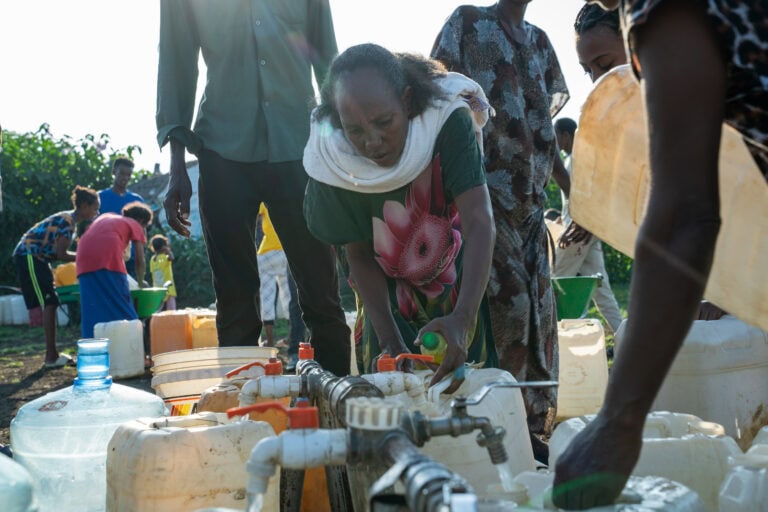
Photo credit: GOPA-DERD