Governing Board

Members

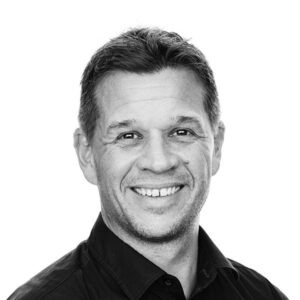
Jonas Nøddekær, International Director at DanChurchAid

Jonas Nøddekær

Secretary General, Folkekirkens Nødhjælp (DanChurchAid)

Secretary General, Folkekirkens Nødhjælp (DanChurchAid)

Jonas Nøddekær is the Secretary General at DanChurchAid, a major Danish humanitarian organisation. From 2017 to 2024, as DCA’s International Director, he managed a large staff team, as well as managing and implementing country programmes and a global strategy. With over 20 years of international experience, including 8 years in Asia and Africa, Jonas demonstrates visionary leadership in programme strategy and planning. He is well-connected in the development and humanitarian sectors, possessing strong skills in management, motivation, and decentralised capacity building. Jonas fosters effective networks in international organisations, employing a participatory management style that emphasises accountability, teamwork, and shared ownership. Jonas is a member of the board for the Danish Institute for International Studies as well as the Danish Institute for Human Rights and a member of the Advisory Board to Christian Aid.
Eva Ekelund, Deputy Director of Act Church of Sweden

Eva Ekelund

Deputy Director, Act Church of Sweden

Deputy Director, Act Church of Sweden

Eva has over 20 years in development practice, advocacy work and policy dialogue. She has represented Act Church of Sweden on ACT Alliance EU’s Policy and Advocacy Group, and has participated in various global civil society networks. Eva has worked within the UN system and international civil society, both in the field and at HQ levels. She has been a board member of the CSO Partnership for Development Effectiveness since its formation in 2012, representing faith-based communities. Eva holds an MsC (1995) from the University of Gothenburg in International Business and Economics, with a focus on economic geography and gender studies.
Katharina Auer, Head of Strategy and Programme Quality, Diakonie ACT Austria

Katharina Auer

Head of Strategy and Programme Quality, Diakonie ACT Austria

Head of Strategy and Programme Quality, Diakonie ACT Austria

Katharina Auer is Head of Strategy and the Programme Quality Department at Diakonie ACT Austria. She brings extensive experience in international development, having served in various management capacities at both headquarters and in the field for international NGOs. Additionally, she has worked as a freelance consultant. Katharina has lived and worked in South East Asia, and her professional journey has been dedicated to advancing women’s rights. Her passion lies in holding organisations accountable to their commitments, so they can contribute meaningfully to a more equitable and just society.
Bernhard Kerschbaum, Head of Global Cooperation Division, Swiss Church Aid - HEKS/EPER

Bernhard Kerschbaum

Head of Global Cooperation Division at Swiss Church Aid - HEKS/EPER

Head of Global Cooperation Division at Swiss Church Aid - HEKS/EPER

Bernhard is a seasoned leader in development and humanitarian work, with over 25 years of strategic and operational experience. He holds a master’s degree in business administration and economics from the University of Hohenheim, Germany. His career includes senior roles at DEG/KfW (Germany) and ZOA Refugee Care (Netherlands), with several years spent in Afghanistan, Pakistan, and Sri Lanka. Since 2013, Bernhard has played a key role in shaping and growing HEKS/EPER’s global cooperation efforts. As Division Head and Executive Management Board member, he oversees around 200 programmes in more than 30 countries, focusing on climate justice, marginalized communities’ rights, access to land and food, and issues of displacement and migration. Renowned for inclusive leadership and strategic insight, Bernhard brings his expertise and collaborative spirit to the ACT Alliance EU Board.

Observers

Thorsten Göbel, Executive Director, ACT Alliance

Thorsten Göbel

Executive Director, ACT Alliance Global

Executive Director, ACT Alliance Global

As Director of Programmes, Thorsten Göbel has been leading the ACT Secretariat’s programmatic work since 2018, and manages the team responsible for humanitarian assistance, sustainable development and advocacy action. He is a member of the Core Management Team and deputises for the General Secretary. In his role, Thorsten represents ACT Alliance in numerous external bodies and meetings, for example on the Board of the ICVA (International Council of Voluntary Agencies) and towards UN organisations in Geneva.

Our Governance Framework

ACT Alliance EU’s governance is structured to enable clear decision-making and maintain transparency. The main elements are:

  • General Assembly: Comprising all members, this body sets our overall policy direction.
  • Governing Board: Made up of a minimum of four members, each a legal entity represented by an individual, the Board is elected by the General Assembly for four-year terms.

The General Assembly: Guiding the Direction of ACT Alliance EU

ACT Alliance EU’s governance is centred around the General Assembly, which plays a crucial role in shaping our strategic and operational direction. This body comprises all full members and associate members (with associate members participating in a consultative capacity). Its responsibilities include:

  • Setting the overall policy direction, ensuring that our strategic plans are aligned with the collective vision of our members.
  • Making key decisions on the organisation’s structure and operations, including the modification of articles and the approval of budgets and accounts.
  • Electing the Governing Board members for four-year terms, directly influencing the leadership that guides our day-to-day activities.
  • Admitting new members and observers and, if necessary, excluding existing ones, thereby maintaining the integrity and purpose of our alliance.
 

The General Assembly makes its decisions through a democratic process, requiring a simple majority for most resolutions. This ensures that our direction and actions reflect the collective will of our members, promoting a governance model that is both inclusive and accountable.

The ACT Alliance EU Governing Board: Representation and Leadership

The Governing Board of ACT Alliance EU is comprised of member organisations, each represented by a designated individual. This structure ensures that the Board reflects the interests and expertise of our member base. With a minimum of four members, the Board benefits from the diverse perspectives and experiences of these organisations. Additionally, a representative from the global ACT Alliance participates as an observer to the Board. While not having voting rights, their presence provides valuable global insights and ensures alignment with the broader objectives of ACT Alliance. This approach to governance reinforces a collaborative and representative decision-making process, aligning our strategic direction closely with the collective voice of our members.