
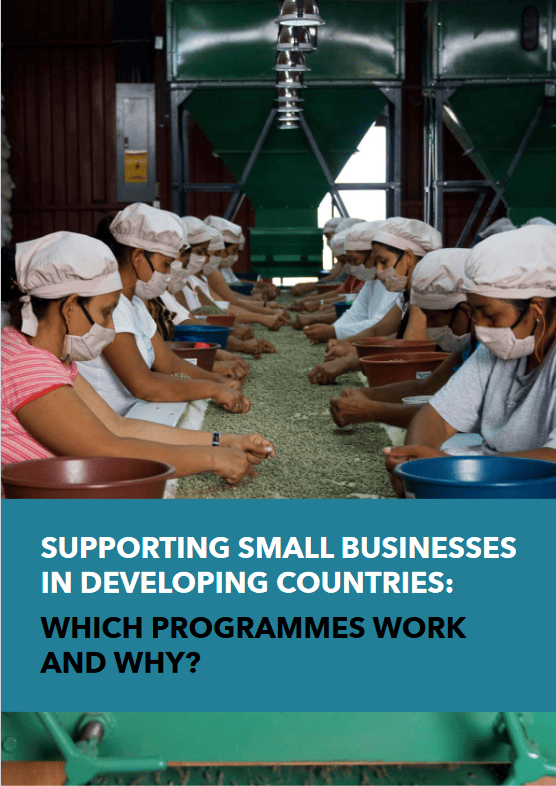
Introduction
In the pursuit of fostering inclusive economic development in developing nations, the efficacy of promoting conducive environments for small and medium-sized enterprises (SMEs) cannot be overstated. This report undertakes a comprehensive examination of the strategies governments and donors can employ to facilitate SME growth. By amalgamating a detailed literature review of SME support initiatives with illuminating case studies drawn from NGO experiences, the report aims to furnish decision-makers with invaluable insights into tailoring policies that genuinely address the needs of small businesses.
The importance of SMEs
SMEs serve as the bedrock of inclusive economic growth and poverty alleviation, particularly in the context of developing countries. Their proliferation contributes significantly to gross domestic product (GDP) and employment rates, making them indispensable drivers of socioeconomic progress. Notably, supporting women-led SMEs emerges as a critical avenue for fostering inclusive economic development. Women entrepreneurs represent a significant proportion of SMEs, yet they often face systemic barriers to accessing finance, markets, and resources. Therefore, targeted interventions are necessary to address gender disparities in entrepreneurship and unlock the full potential of women-led SMEs in driving sustainable development.
Challenges facing SMEs
Despite their pivotal role, SMEs grapple with a myriad of challenges that impede their growth trajectory. Chief among these impediments are limited access to finance, inadequate infrastructure, political instability, and regulatory hurdles. SMEs, particularly those in rural areas, often lack access to essential services such as electricity, transportation, and telecommunications, hindering their productivity and competitiveness. Moreover, women-led SMEs encounter additional barriers such as societal norms, discriminatory practices, and limited access to networks, exacerbating gender inequalities in entrepreneurship. Addressing these multifaceted challenges necessitates concerted efforts to formulate proactive policy interventions and targeted support mechanisms tailored to the unique needs of SMEs, especially those led by women and operating in rural areas.
Governments and donors alike have endeavoured to bolster SMEs through various support mechanisms, encompassing policy reforms, business development services, targeted technical assistance, and value chain programmes. While a plethora of support initiatives exist, challenges such as coordination inefficiencies, capacity constraints, and limited outreach to marginalised groups undermine their effectiveness. Notably, there has been a discernible shift in donor support away from direct SME assistance towards broader business climate reforms, necessitating a recalibration of strategies to better cater to SME needs. Moreover, fostering partnerships between SMEs and large corporations, as well as leveraging technology and innovation, can enhance the competitiveness and resilience of SMEs in the face of evolving market dynamics.
Improving business environments
The efficacy of SME support initiatives hinges upon the implementation of proactive government policies tailored to local contexts. Local-level interventions, such as capacity-building initiatives, access to finance schemes, and infrastructure development projects, are pivotal for catalysing SME growth and fostering entrepreneurship in underserved communities. Robust public procurement policies that prioritise local SMEs, coupled with enhanced value chain linkages and market access opportunities, can unlock new avenues for SME expansion and economic empowerment. Moreover, prioritising women-led SMEs through targeted financial incentives, mentorship programmes, and networking platforms is essential for addressing gender disparities in entrepreneurship and fostering inclusive economic growth.
Conclusion
Nurturing SMEs is indispensable for fostering inclusive economic development in developing countries. By acknowledging and addressing the unique challenges faced by SMEs, policymakers and donors can harness their potential as engines of socioeconomic progress. Embracing proactive policies and comprehensive support measures tailored to local needs is imperative for realising the transformative impact of SMEs on sustainable development agendas. As the global community endeavours to build back better in the wake of unprecedented challenges, prioritising SME growth emerges as a cornerstone of resilient and inclusive economic recovery strategies. By fostering an enabling environment for SMEs to thrive, governments and donors can unlock new pathways to prosperity and ensure that no one is left behind in the journey towards sustainable development.