
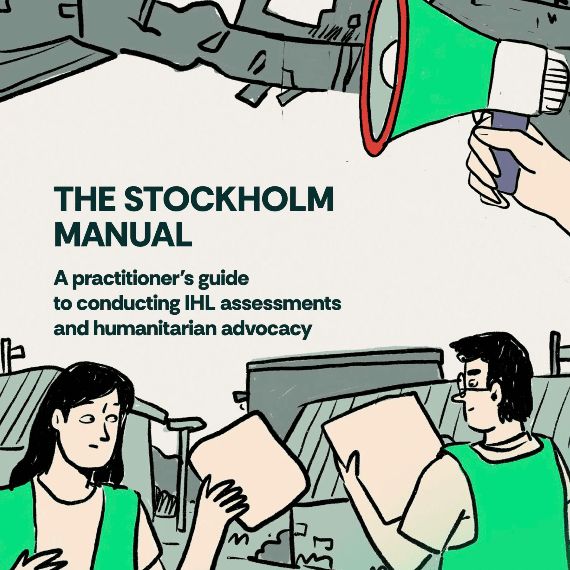
At a time when practitioners, policy makers and journalists are under increasing pressure to navigate technical areas of international humanitarian law, the Stockholm Manual provides step-by-step guidance for conducting IHL-based assessments and engaging in humanitarian advocacy. Today, IHL compliance is facing increasing challenges in conflict settings globally:
“Around the world, from Sudan to Gaza to the DRC, we are witnessing the dire consequences of armed actors disregarding the provisions of IHL, with especially devastating consequences for civilians. The ripple effects of these IHL violations, such as attacks on hospitals and schools, forced displacement, and the denial of humanitarian relief, extend across generations. Faced with these challenges, the need for the humanitarian community to promote respect for IHL has never been more urgent.“ IHL Centre
The Stockholm Manual, produced by the IHL Centre – part of Diakonia Sweden – is a guide which enables practitioners to:
- Understand the relevant provisions of IHL and apply them to their context;
- Assess whether parties to conflict are likely to be failing to carry out their legal obligations;
- Incorporate IHL-based analysis into advocacy, reporting, and humanitarian action to influence the behaviour of armed actors and reduce harm to civilians.
The Stockholm Manual is complemented by the Inclusive IHL: Closing the Gaps in Humanitarian Protection, an equally crucial reference for how to apply the legal obligation to ensure inclusion in the application of IHL. Ensuring actors protect all civilians and minimise the harm they experience means taking account of the intersecting identities of civilians which affect the kind of protection they require, including: age, gender, disability, ethnicity, sexual orientation and migration status.