
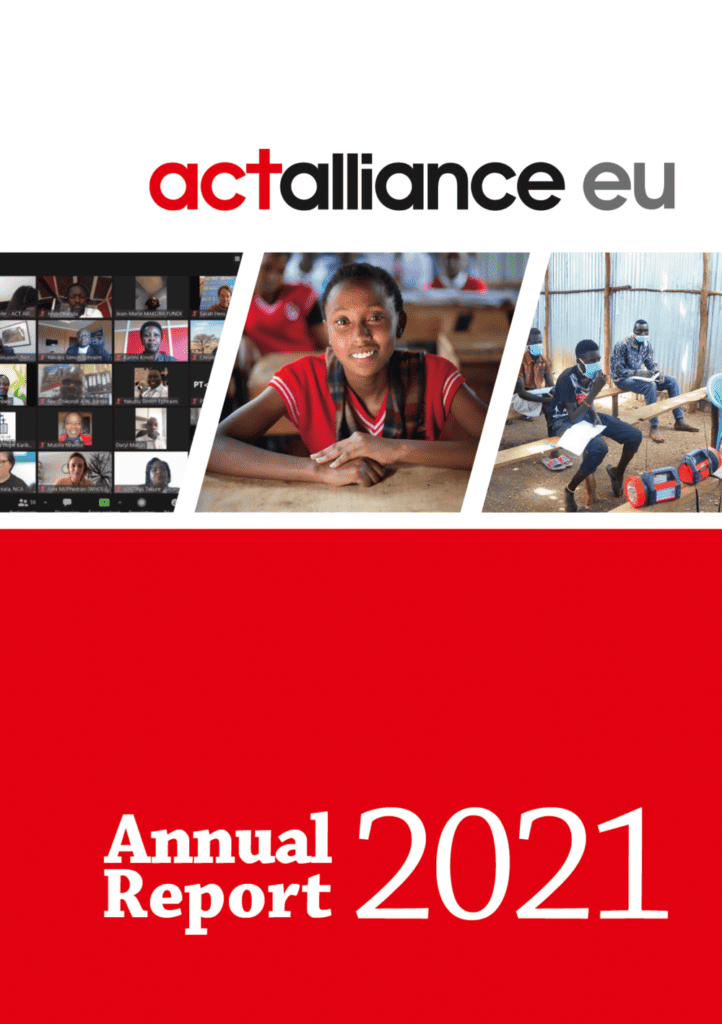
Our Annual Report for 2021 gives a comprehensive overview of our activities, engagements, and initiatives undertaken throughout the year, demonstrating our commitment to promoting positive change and addressing pressing global challenges.
Development Policy and Practice
In 2021, Development Policy and Practice (DPP) experienced a year of significant accomplishments and consolidation. Our efforts in major decision-making and negotiation processes have set the stage for impactful changes in EU support for human development and the role of civil society in the years ahead. Some key highlights include:
- Placing Human Development at the Core: Through sustained advocacy efforts directed towards DG INTPA and the EEAS, we successfully reinstated human development as a central focus of the Africa-EU partnership.
- Enhancing Civil Society Participation: Collaboration with EU institutions resulted in the establishment of effective structures for meaningful civil society participation in the EU-OACPS and Africa-EU partnerships. This achievement reflects years of dedication and advocacy efforts.
- Constructive Dialogue on Migration: We facilitated informed and constructive dialogue between civil society, EU, and African officials on migration. Our open letter on migration challenged prevailing narratives, emphasising its positive developmental potential.
- Advocacy for Inclusive Education and Civic Space Monitoring: Our calls for increased support for inclusive and quality education, as well as the establishment of a monitoring and early warning system on civic space, were echoed in the implementation plans of the new Global Europe instrument.
- Influential Policy Paper: Our policy paper on post-COVID-19 development policy and practice showcased the expertise of our members and provided a robust basis for influencing EU cooperation priorities.
Humanitarian Policy and Practice
In 2021, our focus on humanitarian policy and practice made significant contributions to the localisation agenda and advocated for equity in access to Covid-19 vaccines and treatment. Key highlights include:
- Advocacy for Survivor and Community-led Responses: Timely advocacy efforts at the EU level led to the adoption of survivor and community-led response approaches in ECHO cash policy, enhancing the effectiveness of humanitarian interventions.
- Promoting Locally-led Response and Just Partnerships: Leveraging network learnings, we successfully advocated for the integration of locally-led response and just partnerships in ECHO’s pledged localisation guidance, emphasising the importance of civil society, women, and youth-led organisations.
- Addressing Social Justice and Faith Perspectives: We addressed social justice and faith elements in Covid-19 vaccine equity discussions, contributing to global pressure for increased production and the release of intellectual property rights.
Middle East
In the face of ongoing challenges in the Middle East, our Middle East Working Group (MEWG) continued its vital advocacy efforts. Despite the deteriorating situation, we engaged policymakers through various channels, achieving notable outcomes such as:
- Advocacy for International Justice: We called upon EU institutions and European governments to uphold international justice mechanisms and accountability for violations of international law.
- Defending Palestinian Rights: Our advocacy efforts led to a principled position by EU and Member States officials regarding the designation of Palestinian rights groups as terrorist organisations by Israel.
- Addressing Vulnerable Communities: Through engagement with policymakers, we made progress in addressing the situation of vulnerable communities facing home destructions and forcible transfers in Area C, resulting in concrete preparatory steps by the European Commission and Member States.
- Supporting Efforts in Ireland: We supported efforts in Ireland to acknowledge the de facto annexation of the West Bank, highlighting the importance of international recognition and action.
Transversal Issues
In 2021, the secretariat team focused on building synergies and coherence across strategic objectives. Key transversal issues addressed include:
- Civic Space and Enabling Environment: We prioritised creating an enabling environment for civil society, including discussions on localisation and the role of faith-based organisations.
- Triple Nexus Approach: Emphasising the nexus between humanitarian aid, development, and peace, we worked towards integrating these dimensions in our programming and advocacy efforts.
- Rapid Response Advocacy: A new approach was piloted for rapid response advocacy, enabling the ACT EU network and secretariat to respond effectively to specific crises and country situations.
Finances
Membership contributions remained the primary source of income in 2021, reflecting the generous and sustained support of our members.
Conclusion
As we reflect on the achievements and challenges of 2021 in our Annual Report, we extend our gratitude to all our partners, members, and supporters for their unwavering commitment. Together, we have made significant strides towards our shared vision of a more just, equitable, and sustainable world. We look forward to continuing this journey of impact and advocacy in the years ahead.